




 Biomedical Engineering
 Computer Science and Engineering
 Electrical and Electronic Engineering
 Electronics & Communication Engineering
 Mechanical Engineering
 Artificial Intelligence and Data Science
 MBA
MBA Science and Humanities
CONTACT INFORMATION
Dr.S.A.YUVARAJ
Head of the Department
9894483663
yuvaraj.sa@grt.edu.in
BLOCK - D , 1st floor, GRTIET, Tiruttani.
Biomedical Engineering

Biomedical engineering is a field that integrates Medical science and Engineering. The branch integrates physiology, anatomy, pathology, mathematical and computational sciences with engineering principles. Biomedical Engineering deals with the application of electronic, pneumatic and mechanical instruments in medical science applications. This field seeks to bridge the gap between engineering and medicine.
The bachelor’s course on Biomedical Engineering in this Institute was started in the year of 2014 with an intake of 60 students. This course covers the basic understanding of Human Anatomy and Physiology, Biochemistry, Pathology & Microbiology, and Medical Physics in life sciences. This course focuses on the fundamentals of the Electronics and Instrumentation required for designing medical instruments which ensures better health care. The fundamentals of biomedical signal and image processing, role of computers in medicine and the application of computational intelligence in medical science such as Pattern Recognition & Neural Networks are also a part of the academic curriculum in this course. Imparting knowledge in the field of Biomaterials & artificial organs, Biocontrol systems & Rehabilitation Engineering is an essential part of this course.
This course also imparts training to the students for overall design, maintenance and installation of medical instruments. This course aims to strengthen the manpower in the area of Biomedical Engineering, thus forming a bridge between Engineering and Medical streams for Research & Development and also the regular practices.
Department Vision
To produce competent biomedical engineers capable of developing innovative healthcare technologies that improve quality of life and serve societal needs with ethical values.
Department Mission
M1: To provide strong knowledge in biomedical engineering and interdisciplinary medical technologies.
M2: To develop design and analytical skills for medical device development and healthcare solutions.
M3: To promote research and innovation in biomedical instrumentation, medical imaging, and healthcare technologies.
M4: To cultivate human and ethical values, leadership, teamwork, and entrepreneurial mindset.
PEO1: Apply biomedical engineering principles, clinical knowledge, and modern technologies such as AI and IoT to design and develop bio medical devices for providing health care solutions in healthcare and medical industries.
PEO2: Demonstrate professional competence, leadership, teamwork, and ethical responsibility while working in interdisciplinary healthcare and engineering environments.
PEO3: Engage in lifelong learning, research, and innovation, contributing to the advancement of biomedical technologies and improving societal healthcare outcomes.
PO1 : Engineering Knowledge: Apply knowledge of mathematics, natural science, computing, engineering fundamentals and an engineering specialization as specified in WK1 to WK4 respectively to develop to the solution of complex engineering problems.
PO2 : Problem Analysis: Identify, formulate, review research literature and analyze complex engineering problems reaching substantiated conclusions with consideration for sustainable development. (WK1 to WK4)
PO3 : Design/Development of Solutions: Design creative solutions for complex engineering problems and design/develop systems/components/processes to meet identified needs with consideration for the public health and safety, whole-life cost, net zero carbon, culture, society and environment as required. (WK5)
PO4 : Conduct Investigations of Complex Problems: Conduct investigations of complex engineering problems using research-based knowledge including design of experiments, modelling, analysis & interpretation of data to provide valid conclusions. (WK8).
PO5 : Engineering Tool Usage: Create, select and apply appropriate techniques, resources and modern engineering & IT tools, including prediction and modelling recognizing their limitations to solve complex engineering problems. (WK2 and WK6)
PO6 : The Engineer and The World: Analyze and evaluate societal and environmental aspects while solving complex engineering problems for its impact on sustainability with reference to economy, health, safety, legal framework, culture and environment. (WK1, WK5, and WK7).
PO7 : Ethics: Apply ethical principles and commit to professional ethics, human values, diversity and inclusion; adhere to national & international laws. (WK9)
PO8 : Individual and Collaborative Team work: Function effectively as an individual, and as a member or leader in diverse/multi-disciplinary teams.
PO9 : Communication: Communicate effectively and inclusively within the engineering community and society at large, such as being able to comprehend and write effective reports and design documentation, make effective presentations considering cultural, language, and learning differences
PO10 : Project Management and Finance: Apply knowledge and understanding of engineering management principles and economic decision-making and apply these to one’s own work, as a member and leader in a team, and to manage projects and in multidisciplinary environments.
PO11 : Life-Long Learning: Recognize the need for, and have the preparation and ability for
i) Independent and life-long learning
ii) Adaptability to new and emerging technologies and
iii) Critical thinking in the broadest context of technological change. (WK8)
KNOWLEDGE AND ATTITUDE PROFILE (WK)
WK1 : A systematic, theory-based understanding of the natural sciences applicable to the discipline and awareness of relevant social sciences.
WK2 : Conceptually-based mathematics, numerical analysis, data analysis, statistics and formal aspects of computer and information science to support detailed analysis and modelling applicable to the discipline.
WK3 : A systematic, theory-based formulation of engineering fundamentals required in the engineering discipline.
WK4 : Engineering specialist knowledge that provides theoretical frameworks and bodies of knowledge for the accepted practice areas in the engineering discipline; much is at the fore front of the discipline.
WK5 : Knowledge, including efficient resource use, environmental impacts, whole-life cost, re-use of resources, net zero carbon, and similar concepts, that supports engineering design and operations in a practice area.
WK6 : Knowledge of engineering practice (technology) in the practice areas in the engineering discipline.
WK7 : Knowledge of the role of engineering in society and identified issues in engineering practice in the discipline, such as the professional responsibility of an engineer to public safety and sustainable development.
WK8 : Engagement with selected knowledge in the current research literature of the discipline, awareness of the power of critical thinking and creative approaches to evaluate emerging issues.
WK9 :Ethics, inclusive behavior and conduct. Knowledge of professional ethics, responsibilities, and norms of engineering practice. Awareness of the need for diversity by reason of ethnicity, gender, age, physical ability etc. with mutual understanding and respect, and of inclusive attitudes.
WK – PO Mapping
| PO1 | PO2 | PO3 | PO4 | PO5 | PO6 | PO7 | PO8 | PO9 | PO10 | PO11 | |
| WK1 | ✓ | ✓ | ✓ | ||||||||
| WK2 | ✓ | ✓ | ✓ | ||||||||
| WK3 | ✓ | ✓ | |||||||||
| WK4 | ✓ | ✓ | |||||||||
| WK5 | ✓ | ✓ | |||||||||
| WK6 | ✓ | ||||||||||
| WK7 | ✓ | ||||||||||
| WK8 | ✓ | ✓ | |||||||||
| WK9 | ✓ |
PSO1: Design and develop diagnostic and therapeutic biomedical instruments and devices using modern engineering tools to support medical professionals and improve patient care.
PSO2: Apply biomedical engineering principles to develop healthcare technologies, medical diagnostic systems, and intelligent healthcare solutions addressing industrial and societal needs.
PSO3: Utilize software skills, algorithms, AI, IoT, and data analytics to solve complex healthcare problems and develop advanced biomedical applications.
| S.No. | TOPIC’S | VIDEO LINK |
| 1 | EC8352 – SIGNALS & SYSTEMS BY Mr. G. UMASHANKAR(ASST.PROF/BME) TOPIC – CLASSIFICATION OF SIGNALS |
VIEW |
| 2 | BM8651 – BIOMECHANICS By Mr. S. PRASANTH(ASST.PROF/BME) TOPIC – GAIT ANALYSIS |
VIEW |
| 3 | EC8791 – EMBEDDED & REAL TIME SYSTEMS By Mr. K. NARESH KUMAR(ASST.PROF/BME) TOPIC – INTRODUCTION TO EMBEDDED & REAL TIME SYSTEMS |
VIEW |
| 4 | BM8701 – DIAGNOSTIC & THERAPEUTIC EQUIPMENT II By Ms. S. BHARATHI(ASST.PROF/BME) TOPIC – INTRODUCTION TO EMG |
VIEW |
| S.No | Faculty ID | AICTE ID | Faculty Name | Designation | Course Name | Photo |
| 1 | 2626171986 | 1-473196135 | Dr S A YUVARAJ | Professor | BioMedical Engineering |  |
| 2 | 2680531978 | 1-3798189309 | Dr UMASHANKAR GANESAN | Associate Professor | BioMedical Engineering |  |
| 3 | 2687721998 | 1-747783571 | Mr SUNKARA VENKATA DHARANI KUMAR | Assistant Professor | BioMedical Engineering | 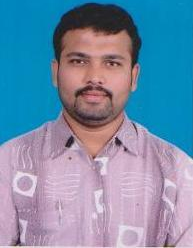 |
| 4 | 2652211987 | 1-10547444461 | Ms S BHARATHI | Assistant Professor | BioMedical Engineering | 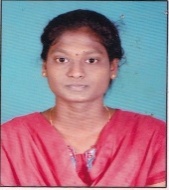 |
| 5 | 2663761984 | 1-2649787213 | Mr K NARESH KUMAR | Assistant Professor | BioMedical Engineering |  |
| 6 | 2636051983 | 1-3362532625 | Mr PRASANTH SELVARAJ | Assistant Professor | BioMedical Engineering | 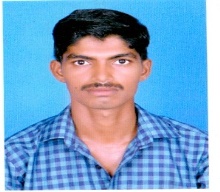 |