



 Biomedical Engineering
 Computer Science and Engineering
 Electrical and Electronic Engineering
 Electronics & Communication Engineering
 Mechanical Engineering
 Artificial Intelligence and Data Science
 MBA
MBA Science and Humanities
CONTACT INFORMATION
Dr. N. E. Edwin Paul
Head of the Department
9944045950
edwinpaul.ne@grt.edu.in
BLOCK - C, 2nd Floor, GRTIET, Tiruttani.
Mechanical Engineering
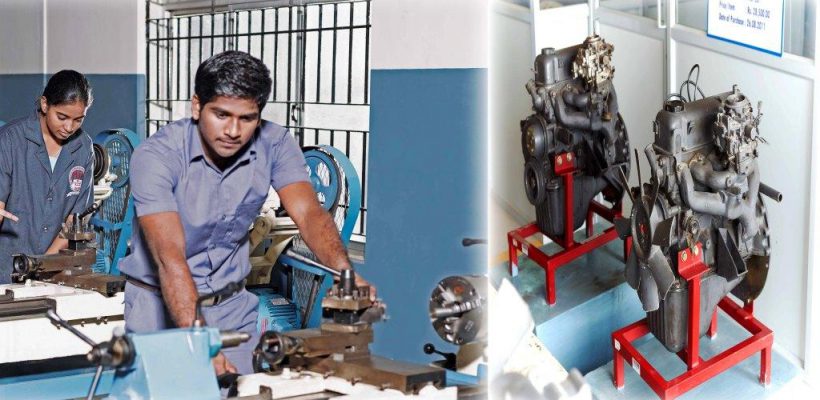
Welcome to Department of Mechanical
The Department of Mechanical Engineering was established in 2009 with the inception of Institute. Mechanical engineering is the most general form of engineering that a student can specialize in; which implies that upon graduating, the career choice is virtually unlimited.
Mechanical
The Department of Mechanical Engineering was established in 2009 with the inception of Institute. Mechanical engineering is the most general form of engineering that a student can specialize in; which implies that upon graduating, the career choice is virtually unlimited.
Mechanical Engineering is the innovative application of science and technology to the design, production and operation of mechanical devices, machinery and systems. Mechanical engineers excel at designing things, especially complex items. They also design industrial machinery and processes, which are used in the manufacture of other things such as paper mills or car assembly plants. Mechanical engineering also involves the efficient use of energy in processes such as heating systems for hospitals or refrigeration plants for food exports.
Upon completion of the degree, students have the opportunities in the fields like Production, Industrial Engineering, Design, Refrigeration and Air Conditioning. They also have the opportunity to work as software engineers in the field of CAD/CAM. Those who wish to pursue further studies can join M.S in universities abroad.
Department Vision
To develop competent mechanical engineers capable of designing innovative and sustainable engineering solutions for industrial and societal needs through quality education, research, and technological advancement with ethical values.
Department Mission
M1: To provide strong fundamentals in mechanical engineering with modern teaching and learning practices.
M2: To develop skills in design, manufacturing, thermal systems, and automation technologies for industrial applications.
M3: To promote research, innovation, and industry collaboration for solving real-world engineering problems.
M4: To nurture leadership, teamwork, entrepreneurship, and ethical values among students to enhance employable skills.
PEO1: Apply mechanical engineering principles to solve industrial and societal problems in Mechanical and allied areas.
PEO2: Demonstrate leadership and teamwork in multidisciplinary engineering environments.
PEO3: Pursue lifelong learning and adapt to emerging technologies in manufacturing and energy systems with ethical values.
PO1 : Engineering Knowledge: Apply knowledge of mathematics, natural science, computing, engineering fundamentals and an engineering specialization as specified in WK1 to WK4 respectively to develop to the solution of complex engineering problems.
PO2 : Problem Analysis: Identify, formulate, review research literature and analyze complex engineering problems reaching substantiated conclusions with consideration for sustainable development. (WK1 to WK4)
PO3 : Design/Development of Solutions: Design creative solutions for complex engineering problems and design/develop systems/components/processes to meet identified needs with consideration for the public health and safety, whole-life cost, net zero carbon, culture, society and environment as required. (WK5)
PO4 : Conduct Investigations of Complex Problems: Conduct investigations of complex engineering problems using research-based knowledge including design of experiments, modelling, analysis & interpretation of data to provide valid conclusions. (WK8).
PO5 : Engineering Tool Usage: Create, select and apply appropriate techniques, resources and modern engineering & IT tools, including prediction and modelling recognizing their limitations to solve complex engineering problems. (WK2 and WK6)
PO6 : The Engineer and The World: Analyze and evaluate societal and environmental aspects while solving complex engineering problems for its impact on sustainability with reference to economy, health, safety, legal framework, culture and environment. (WK1, WK5, and WK7).
PO7 : Ethics: Apply ethical principles and commit to professional ethics, human values, diversity and inclusion; adhere to national & international laws. (WK9)
PO8 : Individual and Collaborative Team work: Function effectively as an individual, and as a member or leader in diverse/multi-disciplinary teams.
PO9 : Communication: Communicate effectively and inclusively within the engineering community and society at large, such as being able to comprehend and write effective reports and design documentation, make effective presentations considering cultural, language, and learning differences
PO10 : Project Management and Finance: Apply knowledge and understanding of engineering management principles and economic decision-making and apply these to one’s own work, as a member and leader in a team, and to manage projects and in multidisciplinary environments.
PO11 : Life-Long Learning: Recognize the need for, and have the preparation and ability for
i) Independent and life-long learning
ii) Adaptability to new and emerging technologies and
iii) Critical thinking in the broadest context of technological change. (WK8)
KNOWLEDGE AND ATTITUDE PROFILE (WK)
WK1 : A systematic, theory-based understanding of the natural sciences applicable to the discipline and awareness of relevant social sciences.
WK2 : Conceptually-based mathematics, numerical analysis, data analysis, statistics and formal aspects of computer and information science to support detailed analysis and modelling applicable to the discipline.
WK3 : A systematic, theory-based formulation of engineering fundamentals required in the engineering discipline.
WK4 : Engineering specialist knowledge that provides theoretical frameworks and bodies of knowledge for the accepted practice areas in the engineering discipline; much is at the fore front of the discipline.
WK5 : Knowledge, including efficient resource use, environmental impacts, whole-life cost, re-use of resources, net zero carbon, and similar concepts, that supports engineering design and operations in a practice area.
WK6 : Knowledge of engineering practice (technology) in the practice areas in the engineering discipline.
WK7 : Knowledge of the role of engineering in society and identified issues in engineering practice in the discipline, such as the professional responsibility of an engineer to public safety and sustainable development.
WK8 : Engagement with selected knowledge in the current research literature of the discipline, awareness of the power of critical thinking and creative approaches to evaluate emerging issues.
WK9 :Ethics, inclusive behavior and conduct. Knowledge of professional ethics, responsibilities, and norms of engineering practice. Awareness of the need for diversity by reason of ethnicity, gender, age, physical ability etc. with mutual understanding and respect, and of inclusive attitudes.
WK – PO Mapping
| PO1 | PO2 | PO3 | PO4 | PO5 | PO6 | PO7 | PO8 | PO9 | PO10 | PO11 | |
| WK1 | ✓ | ✓ | ✓ | ||||||||
| WK2 | ✓ | ✓ | ✓ | ||||||||
| WK3 | ✓ | ✓ | |||||||||
| WK4 | ✓ | ✓ | |||||||||
| WK5 | ✓ | ✓ | |||||||||
| WK6 | ✓ | ||||||||||
| WK7 | ✓ | ||||||||||
| WK8 | ✓ | ✓ | |||||||||
| WK9 | ✓ |
PSO1: Design and analyse mechanical systems and manufacturing processes using modern engineering tools using both software and hardware.
PSO2: Develop innovative solutions in automation, energy systems, and sustainable manufacturing for industrial and societal applications.
| S.No | Name of the Faculty | Designation |
| 1 | Dr.N.E.Edwin paul | HOD/Professor |
| 2 | Dr.S.Dhileepan | Asso.Professor |
| 3 | Dr. R. Vijayakumar | Asst.Professor |
| 4 | Mr. G.K. Sathya | Asst.Professor |
| 5 | Mr.S.Gurumoorthy | Asst.Professor |